


I had everything figured out.
Living in Miami, one block from the beach 🏖️. Good salary. My wife Rosie didn’t even have to work - though she did, just for fun. Working from home with total freedom from my employer. I was comfortable, skilled at my job, living the “dream.”
From the outside? Perfect.
From the inside? I was dying a slow death.
Six years doing the same thing. No challenge. No excitement. Just comfortable. We’d done everything Miami had to offer. The spark was gone.
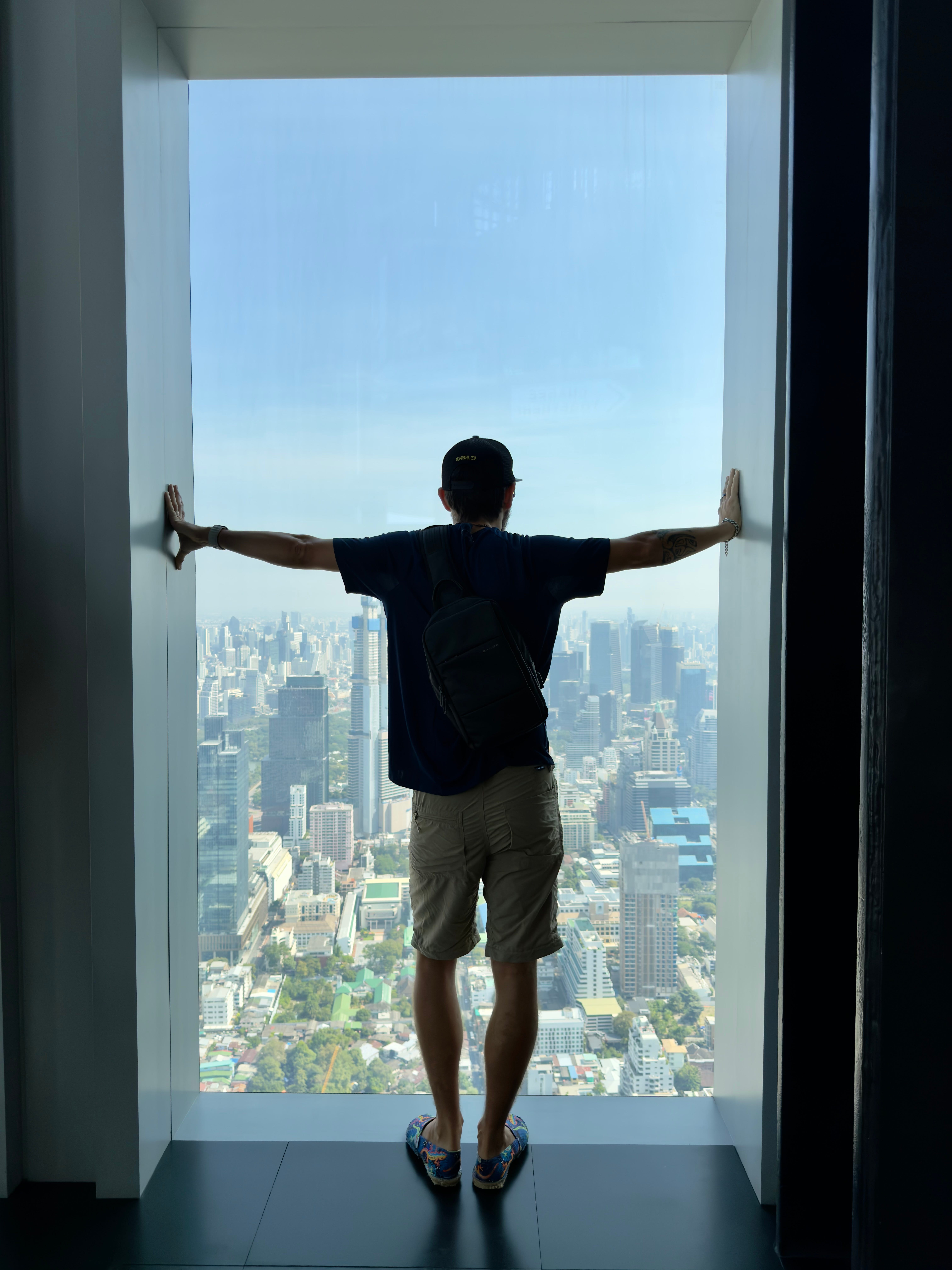
But leaving felt terrifying. How could life get any better than this? What if I threw away this perfect setup and regretted it?
That’s when I stumbled on a pattern I see everywhere now: in myself back then, in almost every coaching client I work with, in people stuck in jobs they hate, relationships that drain them, or cities that no longer serve them.
We’re really bad at evaluating change.
Not just bad, predictably, systematically wrong in the same exact ways.
We Overvalue Risk
Here’s what went through my head when I considered leaving Miami:
What if I can’t make money as an entrepreneur?
What if I can’t find another job?
Am I going to go broke and end up homeless?
What will my parents think?
Sound familiar? 😅
When we think about change, any change, our brain immediately goes into threat detection mode. It’s the lizard brain kicking in: “We’re safe here, why risk our survival?”
The stories we make up with all the “what ifs” are always worse than what actually happens. But those thoughts paralyze us. They stop us from taking the first step.
And let’s be honest, our society feeds this fear constantly. Turn on any news channel, scroll any feed. The world is on fire 24/7/365 🔥. Our nervous systems are in constant high alert, which makes us terrible at decision-making and even more risk-averse.
Add the fear of failure and judgment? Forget it. We can’t look foolish. Can’t lose face. Better to stay miserable and safe than potentially embarrassed and free.
We Undervalue Gains (If We Consider Them At All)
But here’s the real kicker.
We’re so focused on the risks, the “what if things go wrong”, that we become completely blind to the flip side: What if things go right? ✨
Most of the time, we don’t even consider the gains. Which is insane. You’re making a major life decision based on half the information. The decision is already biased before you start.
And even when we DO think about the upside, we undervalue it. We approach it with doubt. “Could I really pull that off?” The brain automatically blurs out the potential gains to drag us back to the risks.
I had an incredible conversation with a coaching client a few weeks ago that illustrates this perfectly.
They’d been living in multiple countries for years, following their partner for work. Now they finally wanted to pursue their own dream, settle somewhere and start their own practice. But the doubts were everywhere:
“Am I going to find clients?”
“Can I build something sustainable?”
“I’m not that young anymore, will I have the time and energy?”
“What if I fail?”
We did the fear-setting exercise together on the call. 💡
First, we evaluated the worst-case scenario. If their current life satisfaction was a 5 out of 10, worst case would drop them to a 4. Ego would be hurt, but in the grand scheme? Not catastrophic.
Then we flipped it.
What’s the cost of inaction?
“I’m going to get more and more frustrated.”
How would you feel in 5 or 10 years, looking at yourself in the mirror, knowing you never tried?
“It won’t look good. Not at all. Not for me, not for anybody.”
I could feel the shift. Their nervous system went on high alert just thinking about this possibility. The tension was palpable.
Finally, I asked: So right now you’re at 5. Worst case if you try is 4. What about if you DON’T try, where does that lead?
“Oh, if I don’t do something... yeah, I’m headed somewhere not good.”
Silence.
I kept my mouth shut. When a breakthrough moment like that happens, you let the person sit with it. Let them process what just surfaced.
That realization, that inaction was actually the riskier path for their wellbeing than trying and potentially failing, changed everything.
They booked coaching because they’d read about my own struggle with feeling scattered and directionless. They came to me saying: “I am struggling with creating my offering, my business. I have been bouncing around with different offers but nothing has taken off. I need to consolidate but I am not sure how to do this. I am too scattered and I have very few clients/students.”
After our work together? They triggered the necessary changes and now have a clear action plan to follow.
My Own Wake-Up Call
This pattern isn’t unique to my clients, I’ve lived it myself.
Back in spring 2020, I was stuck in that Miami paradox, comfortable but unfulfilled.
Then I read The 4-Hour Workweek and did the fear-setting exercise Tim Ferriss describes. 📖
I wrote down every terrifying scenario. Then I asked myself: What’s the REAL worst case here?
My ego would be bruised. I might have to crash at my parents’ place for a few months while job hunting. But I’d still have everything I actually needed.
And if I DIDN’T try?
I’d never know if I could do it. I’d never experience things that only a small percentage of people get to experience in their lifetime. I’d break the promise I made to myself after we lost our baby boy, to live the best life possible.
The gains became crystal clear: Seeing the world. Potentially reaching financial independence. Working a few hours here and there while traveling. Building my own business on my terms.
The upside wasn’t abstract anymore. It was real.
One year later, at the end of April 2021, we left it all behind. 🌎
The Solution? Ask Better Questions
Fear-setting changed everything for me. It’s why I now use it with almost every coaching client.
It forces you to look at BOTH sides, the risks AND the rewards, with the same level of scrutiny.
Most people have never done this exercise properly. They’ve thought about change, sure. But actually sitting down with pen and paper, spending hours working through each scenario? Almost never.
That’s why people stay stuck for years, sometimes decades.
Change is the only constant. You’re either moving forward or sliding backward. There is no “staying the same.”
So What Decision Are You Avoiding Right Now?
What’s that thing you keep thinking about but never act on?
The career change. The move. The business. The relationship conversation. The creative project.
What if the real risk isn’t taking the leap, but staying exactly where you are? 🤔
Ready to get unstuck? I’ve created a Fear-Setting Exercise template that walks you through the exact process I used to quit my job and the same framework I use with coaching clients. Download it, grab a coffee ☕, and give yourself an hour to work through it properly.
If you want to go deeper and work through your specific situation with someone who won’t sugarcoat things, book a free discovery call. We’ll figure out what’s actually keeping you stuck and what getting unstuck looks like for you.
What change have you been putting off? Hit reply and tell me what’s really holding you back. 💬