


I need to start with this: I’ve been extremely privileged.
I’ve been to 30 countries in my lifetime. During the past four years of full-time travel, I visited 18 of them. That might not sound like much when you remember there are roughly 200 countries in the world. But a quick Google search reminded me that only 1-3% of the global population gets to visit 30 countries in their lifetime. I hit that milestone by age 38.
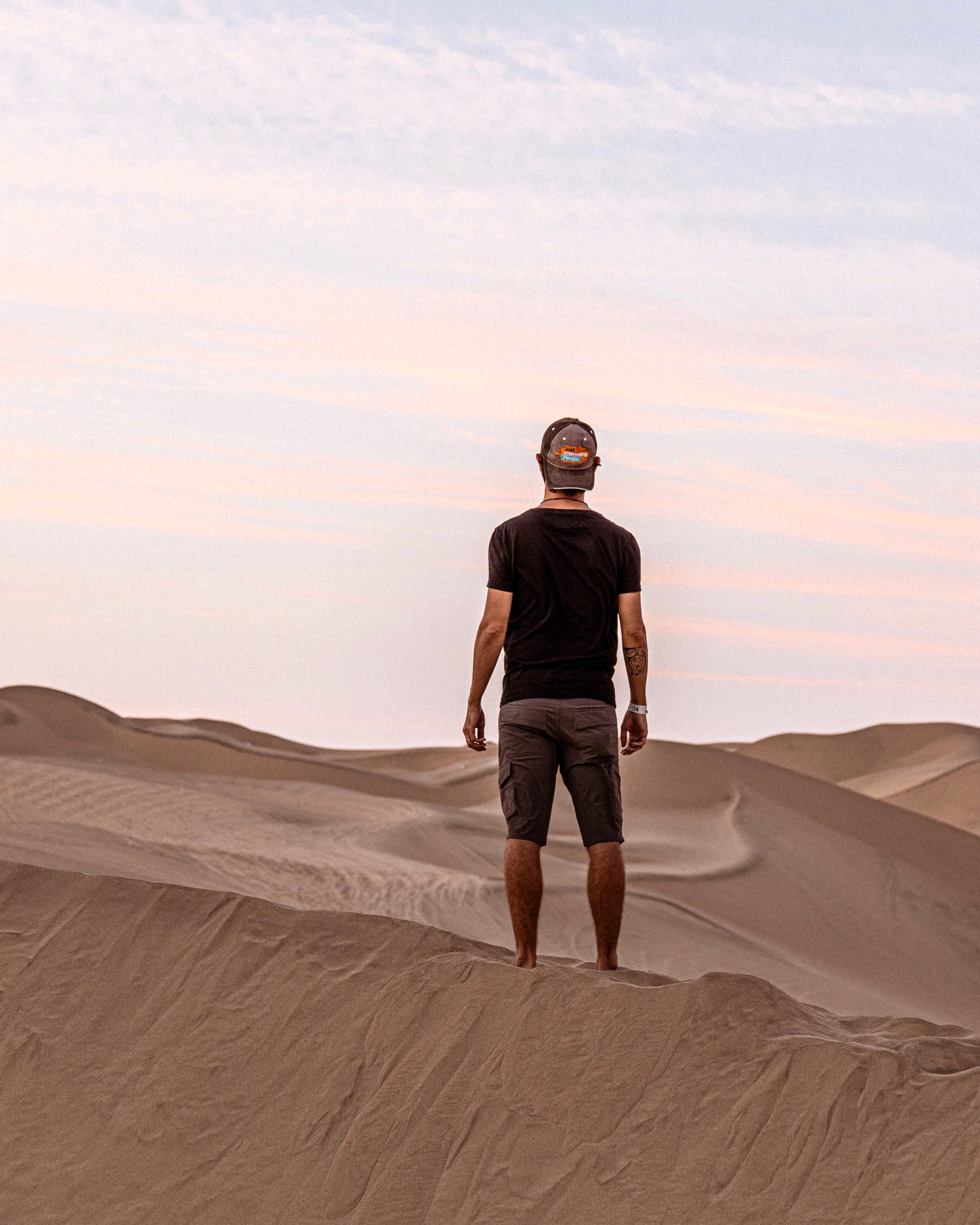
I’m saying this because social media makes it seem like everyone is traveling everywhere all the time. Instagram and YouTube are filled with digital nomads hopping from Bali to Barcelona to Buenos Aires. But the reality is, full-time travel is still something only a tiny fraction of people get to experience.
I was lucky enough to do it. Lucky to be healthy, to have savings, to have a partner willing to take the leap with me. And I’m deeply grateful for all of it.
But here’s the thing: this experience gave me way more than passport stamps and photographs.
It changed me. Taught me things about myself - some great, some less comfortable to admit. Developed skills I didn’t expect to need. Shattered illusions I didn’t know I was carrying.
This is my attempt to reflect on what four years of full-time travel actually taught me, now that this chapter is closing.
What I Was Running Toward
When Rosie and I made the decision to leave Miami and travel full-time in 2020, I wasn’t running away from a bad life. Far from it. I was doing well. Comfortable. Safe.
But comfortable had become boring. Days and weeks blurred together in an endless loop. Same routines, same patterns, same hamster wheel turning underneath me.
I had done enough inner work to know that this couldn’t be it. That the point of life wasn’t to work, repeat the same weeks on autopilot, and wait until 65 to finally live. That seemed like a deeply unmemorable way to spend the one life I get.
We were in our 30s. No kids. Healthy. We had savings. It felt like now or never.
What I was chasing was freedom. Freedom to be where I wanted, when I wanted. To work on my own terms. To talk to clients on my schedule. To actually live and experience life to the fullest while creating unforgettable memories along the way.
And I did it.
I lived. I experienced. I felt.
There’s absolutely no way I could regret this decision.
The Skills Nobody Talks About
We didn’t travel to “collect countries” like Pokémon. We went slowly, stayed in places for weeks or months at a time, really settled into the rhythm of each location.
But even traveling this way, moving constantly for four years taught me some unexpected skills.
I became ridiculously adaptable.
I’m a control freak. Ask Rosie, she’ll confirm this immediately. I love being in control, need it in some ways.
But traveling has a way of reminding you that you don’t actually control much. Especially when you’re traveling on a budget.
You’re at the mercy of transportation companies running on “local time.” Weather that doesn’t care about your plans. Visa rules that change without warning. Available accommodations. Wifi quality. Banking systems that don’t make sense.
When your environment changes constantly, you’re dealing with so many moving parts that things just cannot go according to plan. It’s not a question of if something will go sideways, it’s when.
Nothing terrible ever happened to us. But there were constant inconveniences, small frustrations, unexpected changes.
And when you have little to no influence over what’s happening, the only thing you can control is your reaction. How you adapt. How you adjust. How you keep moving forward despite the chaos.
I learned to go with the flow in ways that would’ve been impossible for me before.
I got really good at settling quickly.
My brain and nervous system learned to adapt to new environments almost instantly. I could walk into a new accommodation, unpack my packing cubes, set up a little workspace, and boom - I was home again.
I didn’t need days to adjust. I didn’t need to “get comfortable” before I could be productive or present.
This is an underrated strength that translates directly to business. Whether you’re starting a new job and need to get up to speed fast, or you’re an entrepreneur diving into a new project - the ability to settle quickly and operate effectively in unfamiliar territory is incredibly valuable.
I became a decision-making machine.
Most people don’t realize how much work and time it takes to travel full-time.
Planning a two-week vacation once a year can feel exhausting. Now imagine doing that 52 times a year, non-stop.
Accommodations. Transportation between cities. Visas. SIM cards. Currencies. Health insurance. There’s always something to research, compare, book, coordinate.
I spent hours browsing Airbnb and Booking.com. Hours reading blog posts trying to figure out how to get from Point A to Point B without spending a fortune. Rosie spent hours on YouTube and Instagram looking for things to do, tours to book, places to see.
It never stopped. There was no break from it.
It was time-consuming and mentally draining.
But it’s a skill I developed over time. At this point, it wouldn’t scare me to become a travel planner tomorrow if I had to. I know I can handle the complexity. I know the tricks.
(And honestly, it’s probably more fun spending someone else’s money.)
I learned to be okay with very little.
When you have to carry all your stuff on your shoulders - literally, not figuratively - you realize very quickly what actually matters.
I learned to detach from material possessions. They’re just tools. They can all be replaced.
When you travel, things break. Things get lost. Things get left behind in random guesthouses in countries you’ll never return to.
That’s just what happens. You replace what you need and move on. Getting upset won’t help or bring anything back.
We traveled on a budget. We didn’t book fancy accommodations. Our non-negotiables were: private room (no dorms), quiet, good internet, safe area.
Sometimes things worked out great.
Other times, you end up with a massive cockroach in your bed at 2am. (Ask Rosie, she still remembers that one vividly.)
When you’re moving constantly and can’t afford luxury, there will be surprises. Discomfort. Long, uncomfortable journeys. Rock-hard beds. Places you don’t particularly like but you’re stuck in for another week.
I learned to be okay being uncomfortable. And most of the time, it really was okay.
I always reminded myself that these things don’t matter in the grand scheme of life.
I realized I’m happy with very little.
Rosie always jokes: “You could live in a shithole and be fine.”
She’s not entirely wrong.
I’ve learned to separate my happiness from the material things around me. As long as I’m healthy, and the people I love are healthy - everything else is negotiable.
Yes, a nicer bed would be nicer. A better kitchen, a prettier view - sure, all of that would be nicer.
But those things aren’t reasons to be unhappy. They’re not reasons to ruin my day.
I put myself in these situations. These are proper first-world problems.
I’m just grateful to have a bed, a shelter, and food every day.
When the Environment Broke Me
There’s one country that really got under my skin during our journey. One place that pushed me past my limits in ways I didn’t expect.
India.
Let me be clear: this isn’t a judgment on Indian people or their culture. This is just my honest experience of what I saw, observed, and how it affected me.
We went to northern India for six weeks. It was four weeks too long.
We had everything pre-booked, so we stuck to our plans even though we weren’t enjoying it. We didn’t want to lose the money. That was a mistake - and a lesson - because we were both pretty miserable there.
India is the strangest country I’ve ever been to. Maybe the most beautiful, some of my favorite photographs came from there. The food was incredible, hands down my favorite cuisine from all the countries we visited. In private settings, Indian people were lovely. We had wonderful conversations with our hosts.
But in the streets? Chaos. Carnage.
Every single one of my buttons was being pushed constantly. My senses were overstimulated non-stop.
The main issue was dealing with people in public spaces. We couldn’t visit anywhere without being asked hundreds of times to take photos. It’s fun two or three times - but at some point, it gets exhausting when you can’t enjoy the sights anymore because you’ve become the attraction.
Constant staring. Aggressive eye contact that felt invasive.
Everywhere we went, it felt like a “me first” mentality. Which doesn’t work in the most populated country in the world. It’s not sustainable when everyone operates that way.
All of this turned me into... honestly, a bit of a dick.
I was rude. Selfish in response to what felt like selfishness directed at me. Impolite. I told people to fuck off when they wouldn’t stop what felt like harassment.
It was weird seeing myself change in real time.
For the last ten days, we basically stopped going out. We just waited to leave.
This is one of the very few times the environment had a real, noticeable impact on my behavior. Even Rosie pointed it out, and she knows me better than anyone.
What triggered me wasn’t just discomfort. It was that my personal space was being invaded constantly. People coming too close. Always demanding attention. Tuk-tuks reversing into me on the street.
My bubble wasn’t protected anymore.
I felt fine in our accommodations or in quiet places. But the moment things got busy, people invaded my safe space in ways that didn’t happen anywhere else we’d been.
It was scary watching myself react this way. I was aware of it happening. I could see myself getting dysregulated, my buttons being pressed, and I just... flipped. Immediately. I couldn’t help it.
It’s a strange experience, seeing yourself be affected and changed in real time, knowing it’s happening but being unable to stop it.
What I Learned About Myself (That I Wasn’t Expecting)
Four years of constant movement, new environments, and minimal external structure revealed some truths about who I actually am.
Some of them were surprising. Some were uncomfortable.
I am a lone wolf.
I know a lot of digital nomads talk about how lonely full-time travel can be. And I’m sure it is, for them.
Obviously, I didn’t do this alone. I shared the entire adventure with Rosie. But even with her by my side, I never felt like I needed to meet other people.
I actually had to force myself to be intentional about talking to people, making small talk, being social. Because left to my own devices, I could easily go weeks doing my own thing without interacting with anyone outside of Rosie.
I think I’ve always been this way. Even as a kid, I spent a lot of time alone - playing in my house, cycling through nature by myself. I wasn’t out with the other kids my age much.
But this experience reminded me of it. Clarified it.
I don’t need to physically see my friends or family. I don’t need to hang out with people every weekend. I’m happy doing my thing on my own.
I didn’t miss people.
This is going to sound bad, but it’s the truth: I didn’t really miss my family or friends.
I’m happy staying in touch online. Texting. Video calls. It doesn’t mean I don’t care about them or love them. I absolutely do.
But I don’t need physical presence.
It’s interesting because most people would describe me as an extrovert, and I’d agree. I can be a social butterfly when I want to be.
But I can also easily spend a week in “my cave” not talking to anyone in real life and be completely content.
I genuinely like spending time with myself.
This might seem obvious given everything I just said, but it’s worth stating clearly: I enjoy my own company.
I don’t get bored being alone. I don’t feel lonely in solitude.
I’m comfortable in my own head, with my own thoughts, doing my own thing.
That’s a gift, and traveling full-time helped me recognize it as one.
What Traveling Didn’t Fix
Here’s something people don’t talk about enough: traveling doesn’t solve your problems.
I’m still the same person I was when I left Miami.
Maybe more expanded. More aware. But fundamentally the same.
I still like being in control. I still like being right about things. Those shortcomings didn’t disappear just because I changed locations every few weeks.
I didn’t run away from the trauma of losing a child. That grief is still present. I still use it as a driver, honestly, as a reminder to live life to the fullest because I’m lucky to be alive.
But the loss itself? Still there. Still real. Still painful when it surfaces.
Traveling doesn’t fix people’s problems like it does in movies or books.
The idea that you can “find yourself” by going somewhere else is mostly bullshit.
You take yourself with you wherever you go. Your patterns. Your wounds. Your tendencies.
What travel can do is give you space to see those things more clearly. To bump up against your edges. To notice what comes up when the familiar structures are stripped away.
But the work of actually dealing with those things? That’s still on you.
What I’m Taking With Me
So here I am. Four years later. Settled in Bangkok with Rosie and our stuffed dog Siam.
This chapter is closing - not because I wanted it to end, but because Rosie needed stability and I love her more than I love traveling. We compromised. We found a city we both love, where we both believe we can thrive and have the quality of life that matters to us.
And honestly? I’m seeing this as an opportunity.
Now I have time to focus on my business without the constant distraction of planning the next move. I have time to write this newsletter. No more excuses.
But more than that - here’s what I’m actually taking with me from these four years:
Proof that I can design life on my own terms.
I had a crazy dream. A completely unconventional idea that most people would’ve talked themselves out of: quit everything, leave the comfortable life behind, and travel the world full-time.
And I actually did it.
Not only did I do it, it was awesome.
I deconstructed the script I’d been handed about how life is “supposed” to look. I rebuilt it my way. I proved to myself that it’s possible to live differently, to question the narrative, to choose discomfort over regret.
That freedom isn’t just location-based anymore. It’s a mindset. A framework I can apply to anything: my business, my relationships, my decisions.
I know now that conforming isn’t the only option. The drift of society is strong, the current pulls hard toward the “normal” path. But you can swim against it. It takes work. It takes courage. It takes being willing to look weird to people who don’t get it.
But it’s absolutely possible.
Permission to keep choosing differently.
I gave myself permission to live unconventionally once, and it worked.
That permission doesn’t expire just because I’m settling down in one place now.
I’m taking that courage, that willingness to question everything, that ability to prioritize living over waiting - into this next chapter.
The location changed. The daily rhythms will change.
But the approach to life? That stays the same.
I don’t want to wait until I’m 65 to finally live. I want to live every single day, during my prime years, while I’m healthy and capable and present.
I had this crazy idea. This dream that seemed unrealistic.
And I went for it.
So here’s what I want to leave you with:
Give yourself permission to dream. And then give yourself permission to actually execute on those dreams.
Don’t be one of those people who says “I wish I had tried.”
Try it. Go for it.
The script you’ve been handed - about how life should look, what success means, when you’re allowed to enjoy yourself - it’s not the only way.
You can rewrite it.
You can jump into the driver’s seat of your own life, set up your own roadmap, and start exploring.
It takes work to go against the tide. The drift of society is strong, and swimming against it is exhausting sometimes.
But I promise you, it’s worth it.
I’m living proof that it’s possible. That a regular person, not born rich, not exceptionally talented, can be part of the 1% who gets to experience something extraordinary.
Not because I’m special.
But because I gave myself permission to want something different, and then I did the work to make it happen.
You can too.
If you want to see just how much logistical chaos went into making this dream a reality, check out my post ‘146 Beds in 4 Years: The Side of Digital Nomad Life Nobody Shows You’ where I break down the actual numbers behind four years of constant movement.
Even though I’m not traveling full time, but rather taking longer trips when I can, I resonated so much with what you said: comfortable can become boring so fast. The majority of people around me are in search of comfort, building huge houses and trying to accumulate, but seeing other people give up on these and start traveling is amazing. Great job!
Thank you for sharing! We are getting ready to take this leap and both are in our late 40’s. We are calling it a midlife gap year. Society was not set up to live a life in this way without judgement. It’s been interesting telling others and hearing their reactions. Thankfully, we both are set in this adventure no matter what anyone might think.