


Most people who travel expect some kind of revelation. A moment where the world suddenly makes sense. An enlightenment experience, like a switch being flipped.
That’s not what happens. At least, that’s not what happened to me.
The changes travel brought into my life were subtle. Progressive. Almost invisible while they were happening. I only really noticed them when I looked back.
The best way I can explain it is with your iPhone camera.
When you’ve never traveled, you see the world through a very narrow, zoomed-in lens. Think x8 zoom. You can see clearly, but only a tiny section of what’s actually in front of you. You’re missing enormous amounts of context.
Each time you travel, you zoom out a little. x4. x2. x1.
You start to see what was always there, just outside your frame. And slowly, you build a picture of the world that’s actually close to what the world looks like.
Here’s what I mean. These are four photos I took of my apartment wall this week.


Same wall. Same photos. Completely different picture depending on where you’re standing.
That’s what travel does to your worldview.
I know this because I started from about as zoomed-in as it gets.
Where I started
I grew up in a village of 1,500 people in the south of France, near Perpignan. Everyone knew everyone. Ways of thinking, ways of living, they were all more or less the same.
There was some diversity around me, mostly due to the proximity to the Spanish border. People from Spain, Portugal, North Africa. But the message I absorbed from the adults around me wasn’t about tolerance or curiosity. It was closer to: “this is the right way to live. Everything else is wrong.”
And more specific things on top of that. Don’t trust Arabs and Muslims, they’re bad people. Don’t bring a girl home from there, or you’re out.
The TV news wasn’t much better. It never said anything directly, but the images they chose told their own story. Whenever something bad happened, the faces shown were always the same. The brain connects dots quickly.
As a good kid who listened to the adults... I believed all of it.
My first small zoom out was going to university in Toulouse. Bigger city, more people, slightly more variety. But the overall environment was still familiar enough that it didn’t shift much in me.
The first real shift came in Australia.
Sydney, 2010
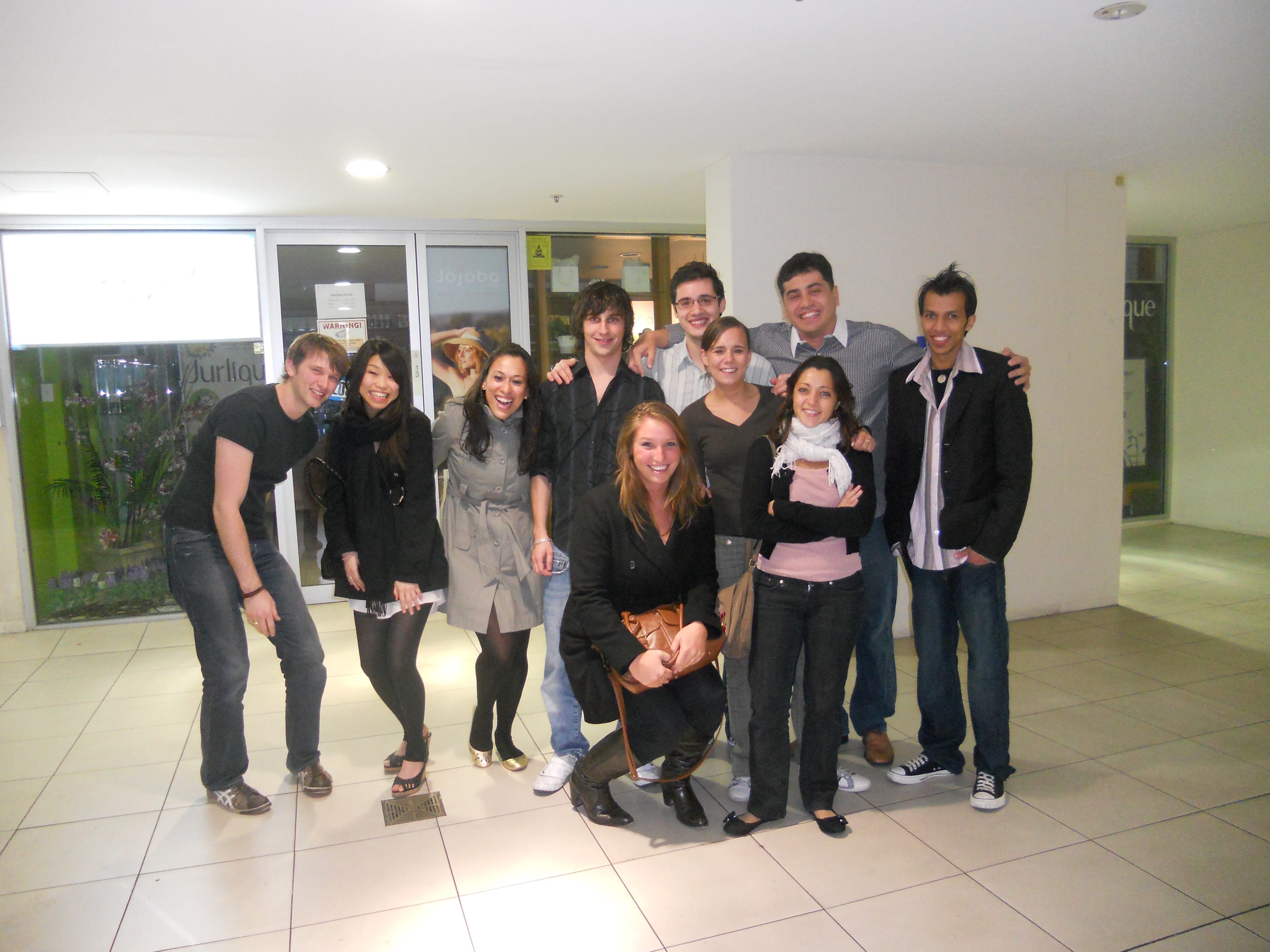
I was 22. I spent six months there doing an internship - a new language in practice (my English was pretty rough), a new culture, a completely different way of life. I lived with people from Brazil, the Netherlands, England, Germany. I worked alongside Australians, Spanish, Bangladeshi.
And I quickly met Rosie. She’d grown up very differently from me. Her parents traveled. She’d been exposed to a lot, in good ways and in harder ways too. She was already zoomed out in ways I couldn’t yet see.
I remember walking around the city and seeing people with really eccentric looks, or people doing tai-chi in the park, and my immediate reaction was basically: what is wrong with you. Why are you so weird? Why are you doing that in public? You’re not supposed to do that.
Rosie would look at me and ask, genuinely: “Why do you care? Why does it bother you?”
I didn’t have an answer. The only thing I had was “it’s weird. It’s not normal.”
Which, of course, is not an answer at all.
But here’s what that moment actually was: it was the first time I became aware that I had a problem. I couldn’t justify my reactions. I had no real argument. Just a reflex, inherited from somewhere, that I’d never once questioned.
That awareness was the first step.
The second step happened on its own, slowly, just through being there. After a few weeks, I stopped noticing the eccentric people. They were just part of life. People expressing themselves, happy, not bothering anyone. The discomfort faded not through a conscious decision, but through exposure. Through being around it long enough that it stopped being strange.
No single moment I can point to. Just a gradual, quiet shift. And I think that’s actually how most real change works, not one big epiphany, but a slow accumulation of new normal.
I became less judgmental. More tolerant. More aware that the way people lived back home wasn’t the only valid way. Their beliefs weren’t capital-T Truths. They were just one way of seeing things, shaped by one particular place and time.
First zoom out. More of the picture.
Indonesia, 2016
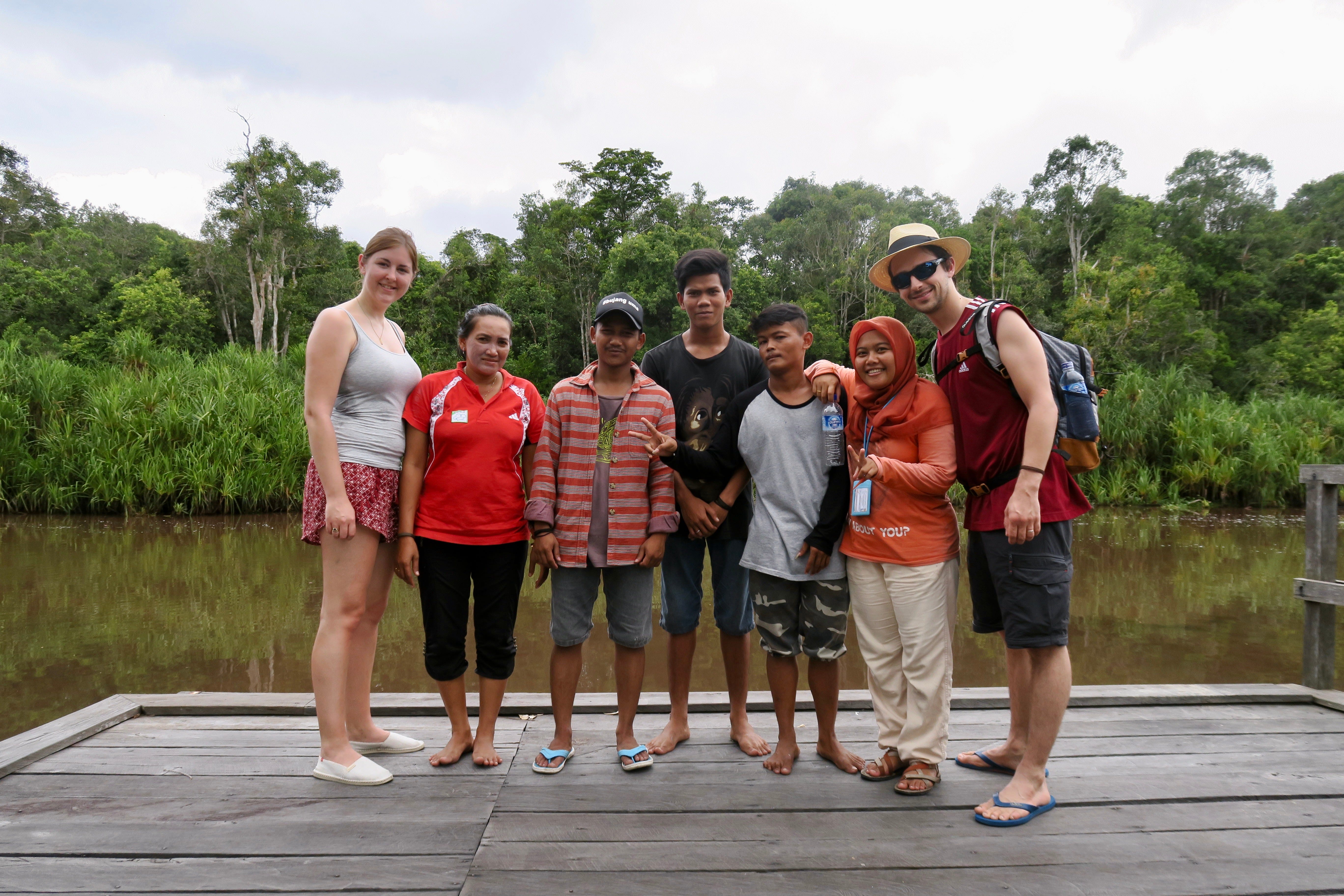
Six years later, Rosie and I went to Indonesia for our honeymoon. One of the largest Muslim-majority countries in the world.
Remember what I said earlier, about the messages I grew up with. That was the context I was bringing into that trip.
In Borneo, we spent four days with a local guide named Febri. She was, at the time, one of the only female guides on the island. Her father had been a guide, so she’d grown up in the rainforest. She could spot a spider or a crocodile from insane distances, in near darkness. The jungle was just her home.
She also wore a hijab. And I’ll be honest: when I first saw her, some old reflexes kicked in. Things I wasn’t proud of but couldn’t pretend weren’t there.
Four days later, every single one of those reflexes was gone.
Febri was just a young woman with a life she loved and dreams she was building. She was about to get married. She was excited about having kids. She talked about the wildlife and her island with a kind of passion and knowledge I’ve rarely seen in anyone. There was something genuinely beautiful about how connected she was to her world.
Yes, she had different beliefs, different cultural references. Some things that were completely normal for her still feel foreign to me. But I understood, really understood, that those differences didn’t make either of us better or worse. Just different.
I asked a lot of questions. She answered all of them. Four days of conversation that I can still recall in vivid detail, ten years later. Because the differences were exactly what made it so rich.
Another zoom out. More context. More of the picture.
It’s not a destination
I want to be clear about something: I’m not fully “cured.” I still carry beliefs I haven’t shed yet. Some about myself, some about others. There are corners of my thinking I haven’t cleaned out and probably won’t for a long time, maybe ever.
But that’s the point. This isn’t a process with a finish line. It’s just an ongoing expansion, zoom out, see more, understand more, repeat.
All the traveling I’ve done since has only continued that. Without those trips, without the people I met along the way, I’d still be the stubborn, close-minded guy from a 1,500-person village in the south of France. Certain he already knew how the world worked.
You don’t need a plane ticket
Here’s what I want to say to anyone thinking: “that’s nice Jeremie, but I can’t afford to fly to Australia or Indonesia.”
The flights aren’t the point.
What changed me wasn’t the miles. It was the exposure to people and perspectives I hadn’t encountered before. The discomfort of being in an unfamiliar environment and having to sit with it long enough for it to feel normal.
That can happen in your own city if you’re intentional about it. A different neighborhood. A different community. A conversation with someone whose life looks nothing like yours. The exposure is what matters, not the passport stamp.
And one caveat for those who do travel: going to a resort where 90% of the guests speak your language and the staff are trained to make everything feel familiar, that’s a vacation, not an expansion. Nothing wrong with it, but don’t expect it to zoom you out. You haven’t really left your bubble, you’ve just moved it somewhere warmer.
The real shift comes from contact. From letting something genuinely different in.
That’s true whether you do it by boarding a plane, walking into an unfamiliar room, or simply deciding to have a real conversation with someone who sees the world differently from you. Sometimes that person is a guide in a rainforest. Sometimes it’s a coach asking you questions you’ve never thought to ask yourself.
Either way, the zoom out is available to you.
J
Great article. Getting to know others who are different from you breaks down those stereotypes and narratives that have been fed to you by others. As Mark Twain famously said, “Travel is fatal to prejudice, bigotry and narrow-mindedness, and many of our people need it sorely on these accounts.”
Brilliant! As you say you don’t necessarily need to travel to learn these perspectives but it’s a (nearly!) sure way to find them. I grew up with similar perspectives purely from a lack of real world experience of other cultures and travel definitely taught me so much.